How Sidecar Pattern Works
You are now 171,001+ subscribers strong. Let’s try to reach 172k subscribers by 20 September. Share this post & I'll send you some rewards for the referrals. Get my system design playbook for FREE on newsletter signup: This post outlines the sidecar pattern. You will find references at the bottom of this page if you want to go deeper.
Once upon a time, a single server was enough to run an entire site. The clients connected to it over the internet.
But as the internet grew, traffic to some sites skyrocketed. And it became hard to scale those sites reliably. So they installed more servers and added logic for logging, monitoring, and security. Yet it became difficult to update the app’s code without affecting its reliability. So they set up a sidecar. It’s a design pattern. And runs a small service alongside the app to help with tasks such as logging, monitoring, or security. Imagine a motorcycle with a sidecar. The driver steers the vehicle, while the sidecar passenger carries the map, radio, or bag. Similarly, the sidecar pattern decouples the operational features from the app’s logic. Onward. CodeRabbit: Free AI Code Reviews in CLI (Sponsor)
CodeRabbit CLI is an AI code review tool that runs directly in your terminal. It provides intelligent code analysis, catches issues early, and integrates seamlessly with AI coding agents like Claude Code, Codex CLI, Cursor CLI, and Gemini to ensure your code is production-ready before it ships.
Sidecar PatternLet’s dive in: 1. Architecture
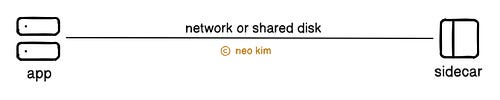
Here’s how it works:
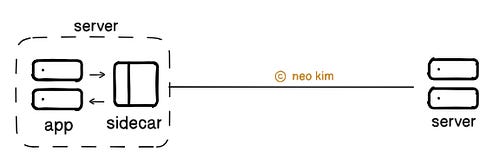
Also it’s possible to update or replace the sidecar without affecting the app. There are 2 ways to deploy a sidecar:
Yet the way a sidecar gets deployed depends on the use case and infrastructure setup. Let’s keep going! 2. Use CasesHere are three popular use cases of the sidecar pattern: Traffic Proxy The sidecar acts as a traffic manager. It controls incoming and outgoing requests for the app.
Here’s how:
Besides the sidecar decrypts the incoming traffic before sending it to the app. This avoids the need for retry logic or security logic inside the app itself. It’s also used to add HTTPS support to legacy services. A popular implementation of the sidecar traffic proxy is Envoy. It usually gets deployed as a separate container alongside the app. Logging and Monitoring Log management and monitoring increase the app complexity. A sidecar solves this problem by collecting logs and sending them to a central system.
Here’s how:
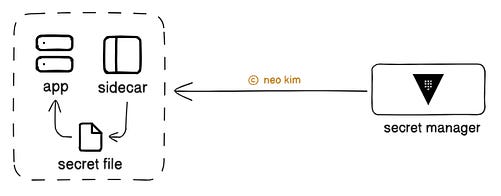
It lets the developer view all logs in a single place without changing the app’s code. A popular implementation of the sidecar for logging and monitoring is Fluentd. It’s possible to deploy it as a separate process or container alongside the app. Security Management It’s unsafe for an app to store sensitive data, such as passwords or API tokens. A sidecar solves this problem by managing sensitive data for the app.
Here’s how:
This technique keeps the secrets separate from the app’s code for security. A popular implementation of the sidecar for security management is Vault Agent. 3. TradeoffsHere’s how the sidecar pattern helps with a microservices architecture:
Yet everything comes with a tradeoff, and the sidecar too. Here are some of them:
The sidecar pattern became popular with microservices architecture. Yet a monolithic app can also use it to handle operational tasks for reliability. The sidecar pattern is useful if the app runs in different languages and frameworks. But avoid using it if the app has resource limitations and needs fast communication. Subscribe to get simplified case studies delivered straight to your inbox: Want to advertise in this newsletter? 📰 If your company wants to reach a 170K+ tech audience, advertise with me. Thank you for supporting this newsletter. You are now 171,001+ readers strong, very close to 172k. Let’s try to get 172k readers by 20 September. Consider sharing this post with your friends and get rewards. Y’all are the best.
ReferencesUnlock access to every deep dive article by becoming a paid subscriber:
|